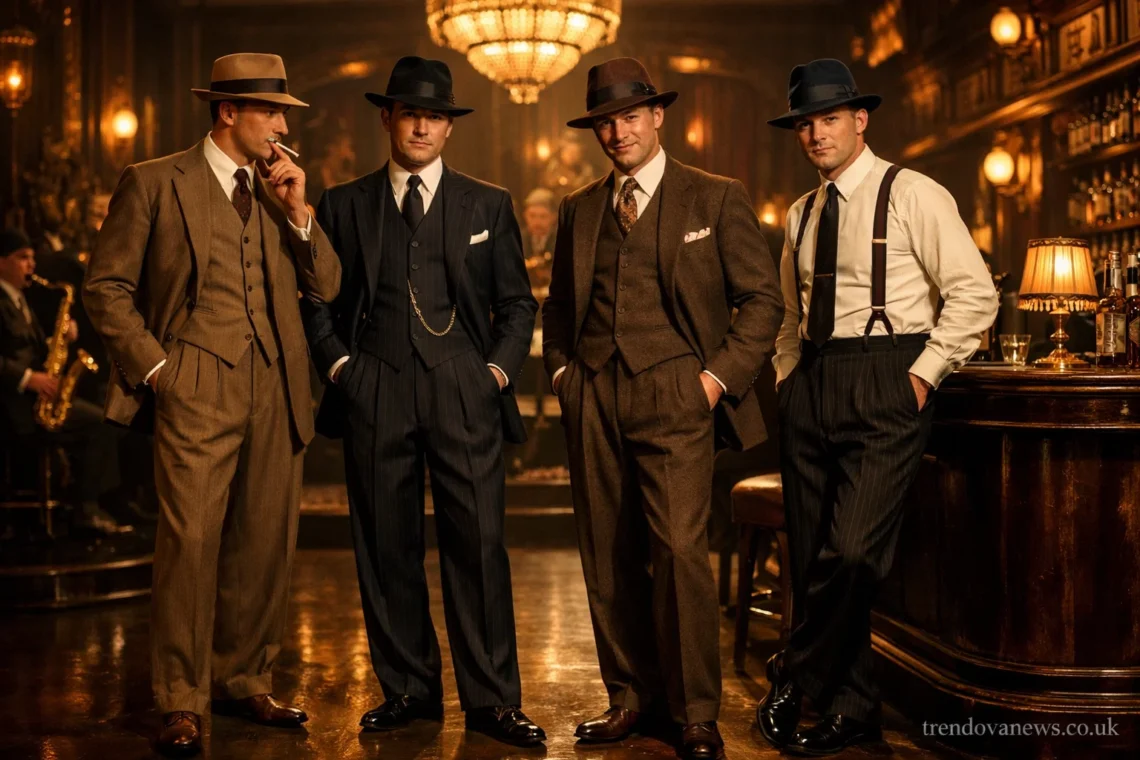
Introduction to Roaring 20s Fashion Men
roaring 20s fashion menfor men reflects one of the most transformative decades in style history, where tradition met modernity in a striking way. After the end of World War I, society experienced rapid economic growth, cultural change, and a desire for self-expression. Men’s fashion evolved to match this new energy, moving away from stiff Victorian influences toward more relaxed yet still refined clothing. The result was a distinctive look that balanced elegance, comfort, and personality.
This era is often associated with jazz culture, lively social scenes, and a growing middle class that embraced fashion as a form of identity. roaring 20s fashion men Men were no longer confined to purely functional attire; instead, they began experimenting with fabrics, colors, and silhouettes. The Roaring Twenties set the stage for modern menswear, making it a key period for understanding how today’s fashion trends developed.
Cultural and Social Influences on 1920s Menswear
The dramatic shift in roaring 20s fashion men during the 1920s was closely tied to cultural and social changes happening around the world. The aftermath of the war created a desire for optimism and celebration, and this mindset was reflected in clothing choices. Jazz music, dance halls, and nightlife became central to urban life, encouraging men to dress in a way that felt stylish yet comfortable enough for movement and socializing.
At the same time, the expansion of media and cinema introduced influential style icons who shaped public perception of fashion. Men began to adopt trends seen on screen and in magazines, leading to a more unified sense of style across different regions. roaring 20s fashion men This blend of cultural energy and global influence helped define the iconic look of Roaring 20s men’s fashion.
The Rise of Tailored Suits and Sharp Silhouettes
Suits were the foundation of men’s fashion in the Roaring Twenties, and their design underwent significant refinement during this period. The classic three-piece suit became a staple, consisting of a jacket, waistcoat, and trousers. roaring 20s fashion men These suits were tailored to fit more naturally on the body, offering a cleaner and more modern silhouette compared to the bulky styles of earlier decades.
Design elements such as wider lapels, structured shoulders, and double-breasted jackets added sophistication to the overall look. Patterns like pinstripes, checks, and herringbone were widely popular, allowing men to express individuality within a formal framework. The suit became more than just formalwear; it was a symbol of confidence, professionalism, and social status.
Fabrics, Colors, and Textile Innovation
The 1920s introduced greater variety in fabrics and colors, reflecting the era’s spirit of experimentation. Traditional materials such as wool and cotton remained popular, but lighter options like linen gained prominence, especially in warmer climates. roaring 20s fashion men These fabrics provided comfort without sacrificing elegance, making them suitable for both formal and casual settings.
Color palettes expanded beyond dark, roaring 20s fashion men conservative tones to include lighter shades like beige, gray, and even subtle pastels. Patterns became more adventurous, with stripes and checks adding visual interest to outfits. This shift in textile use and color choices marked a move toward more expressive and versatile menswear.
Shirts, Collars, and Layering Styles
Shirts in the Roaring Twenties played a crucial role in defining a man’s overall appearance. Many shirts featured detachable collars, which allowed for easy cleaning and customization. This practical innovation also gave men the flexibility to switch between formal and semi-formal looks by simply changing the collar style.
Layering became an important aspect of dressing during this era. Waistcoats, sweaters, and jackets were combined to create depth and texture in outfits. roaring 20s fashion men This approach not only enhanced the visual appeal of clothing but also provided adaptability for different occasions and weather conditions. The emphasis on layering remains a key principle in modern fashion.
Trousers and the Shift Toward Comfort
Trousers in the 1920s were designed with both style and comfort in mind. High-waisted designs were standard, often supported by suspenders rather than belts. This created a streamlined appearance that complemented the tailored suit. The fit was generally relaxed compared to earlier periods, allowing for greater ease of movement.
As the decade progressed, wider-legged trousers such as Oxford bags gained popularity, particularly among younger men. roaring 20s fashion men These looser styles reflected a broader trend toward comfort and individuality. The evolution of trousers during the Roaring Twenties highlights the growing importance of practicality in fashion without compromising on style.
Casual Wear and Leisure Fashion Trends
While formal attire remained important, the 1920s also saw the rise of casual wear as an essential part of men’s wardrobes. Leisure activities such as sports, travel, and outdoor pursuits influenced clothing choices, leading to more relaxed and functional designs. Sweaters, blazers, and lighter trousers became common for everyday wear.
This shift toward casual fashion marked a significant change in how men approached dressing. Clothing was no longer limited to strict formal standards; instead, it adapted to different aspects of life. roaring 20s fashion men The introduction of casual wear during this era laid the groundwork for the diverse and flexible fashion landscape we see today.
Accessories That Completed the Look
Accessories were an integral part of Roaring 20s men’s fashion, adding character and refinement to outfits. Hats were particularly important, with styles like fedoras, flat caps, and bowler hats being widely worn. These accessories were not just practical but also served as key style statements.
Other details such as pocket watches, cufflinks, tie pins, and suspenders contributed to a polished appearance. Ties and bow ties allowed men to experiment with patterns and colors, enhancing their overall look. The attention to accessories demonstrated the importance of detail in achieving a complete and sophisticated outfit.
Footwear and Grooming Standards
Footwear in the 1920s reflected the same balance of style and practicality seen in clothing. Leather oxford shoes were a popular choice for formal occasions, while brogues and two-tone shoes added variety to everyday wear. Shoes were carefully maintained, emphasizing the importance of presentation.
Grooming was equally essential in defining the era’s aesthetic. Men typically wore their hair short and neatly styled, often slicked back with pomade for a clean finish. Facial hair, particularly mustaches, was also fashionable. These grooming standards reinforced the overall image of refinement and attention to detail.
Formalwear and Evening Elegance
Evening attire in the Roaring Twenties maintained a strong sense of tradition while incorporating modern elements. Tuxedos were the preferred choice for formal events, often paired with crisp shirts and elegant accessories. These outfits were designed to convey sophistication and were worn at social gatherings, parties, and special occasions.
Despite the rise of more relaxed fashion, formalwear remained an essential part of a man’s wardrobe. The ability to transition between casual and formal styles became increasingly important, reflecting the dynamic nature of life during the 1920s. This versatility continues to influence modern fashion choices.
Lasting Legacy of Roaring 20s Men’s Fashion
The influence of Roaring 20s fashion on modern menswear is both profound and enduring. Many elements introduced during this decade, such as tailored suits, attention to detail, and the balance between comfort and elegance, remain central to contemporary style. The era redefined what it meant to dress well, emphasizing individuality and confidence.
Today, designers and fashion enthusiasts continue to draw inspiration from the 1920s, incorporating vintage elements into modern designs. Whether through classic tailoring or subtle accessories, the legacy of this period lives on. Roaring 20s fashion for men serves as a timeless example of how style can evolve while maintaining its core principles.
Conclusion
Roaring 20s fashion for men represents a pivotal moment in the evolution of style, blending tradition with innovation in a way that continues to resonate today. From the refined tailoring of suits to the emergence of casual wear and expressive accessories, the decade introduced trends that shaped the future of menswear. It was a time when fashion became a powerful form of self-expression.
Understanding the significance of this era provides valuable insight into the foundations of modern style. The Roaring Twenties demonstrated that clothing could be both functional and fashionable, setting a standard that still influences how men dress today. Its legacy endures as a symbol of elegance, creativity, and timeless sophistication.