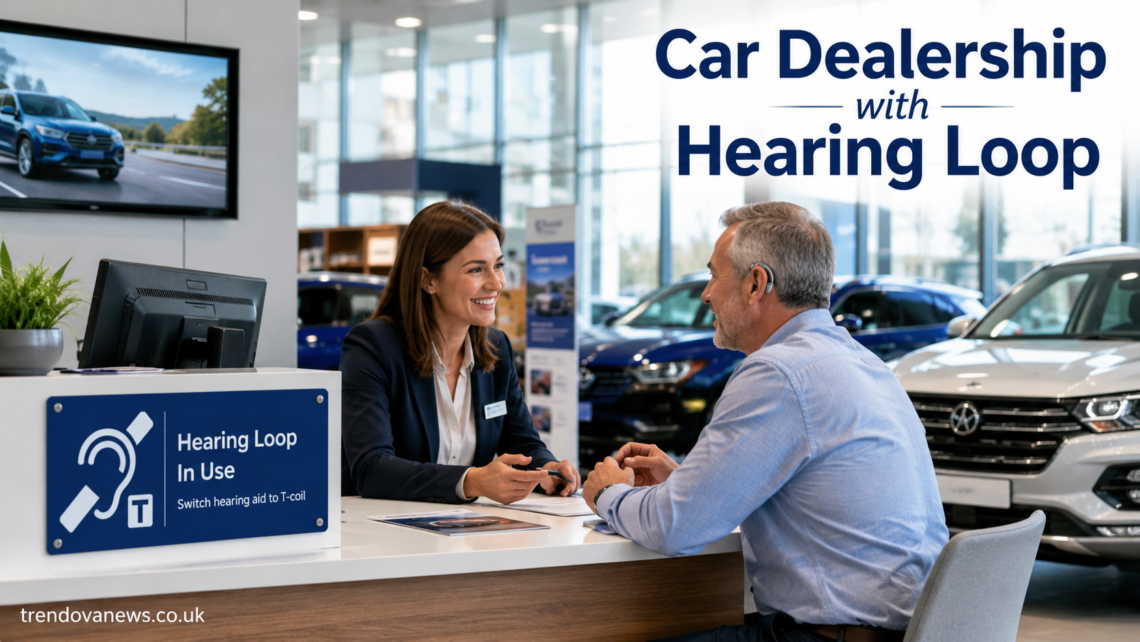
car dealership with hearing loop Buying a car is a significant financial and personal decision. Whether someone is purchasing their first vehicle, upgrading to a newer model, or investing in an electric car, the process involves detailed conversations, careful consideration, and important paperwork. For people with hearing loss, however, navigating a busy car dealership can present communication challenges that affect their overall experience. car dealership with hearing loop This is where a car dealership with hearing loop technology can make a meaningful difference.
As businesses increasingly focus on accessibility and customer inclusion, hearing loop systems have become an important feature in many customer-facing environments. These systems help people who use hearing aids or cochlear implants communicate more effectively by reducing background noise and delivering clearer sound directly to their hearing devices. car dealership with hearing loop In the automotive industry, where communication plays a central role in sales, financing, servicing, and customer support, hearing loops provide a valuable solution that benefits both customers and dealerships.
A car dealership with hearing loop facilities demonstrates a commitment to accessibility, customer satisfaction, and equal service for all visitors. Beyond meeting accessibility expectations, these systems help create an environment where customers with hearingcar dealership with hearing loop impairments can confidently engage in discussions, understand important information, and make informed purchasing decisions without unnecessary barriers.
Understanding Hearing Loop Technology
car dealership with hearing loop also known as an induction loop system, is an assistive listening technology specifically designed to help individuals with hearing loss hear speech more clearly. The system works by transmitting sound directly from a microphone through a loop wire connected to an amplifier. Compatible hearing aids and cochlear implants equipped with a telecoil setting can receive this signal directly, eliminating much of the background noise that often interferes with conversations.
Unlike traditional amplification systems that simply make sounds louder, hearing loops improve sound clarity by delivering the speaker’s voice directly to the listener’s hearing device. This allows users to focus on speech rather than competing environmental sounds.car dealership with hearing loop The technology has become widely recognized as one of the most effective accessibility solutions for public and commercial spaces.
In a dealership environment, where large open showrooms, tiled floors, glass walls, and multiple conversations create acoustic challenges, hearing loops can dramatically improve communication. Customers can better understand sales representatives, car dealership with hearing loop finance specialists, service advisors, and reception staff throughout their visit.
Why Accessibility Matters in Modern Car Dealerships
Accessibility extends far beyond wheelchair ramps and accessible parking spaces. True accessibility includes creating communication-friendly environments where every customer can interact comfortably and independently. For individuals with hearing loss, car dealership with hearing loop clear communication is essential throughout the vehicle purchasing journey.
When customers struggle to hear important details about vehicle specifications, financing agreements, warranty coverage, or service plans, misunderstandings can occur. These challenges may lead to frustration, uncertainty, car dealership with hearing loop and reduced confidence during the purchasing process. Hearing loop systems help remove these barriers by supporting clearer conversations between customers and dealership staff.
Modern consumers increasingly expect businesses to provide inclusive experiences. Accessibility is no longer viewed as an optional feature but as an important component of excellent customer service. Dealerships that invest in communication car dealership with hearing loop accessibility demonstrate respect for diverse customer needs while enhancing their reputation within the community.
Furthermore, accessible dealerships often attract a broader customer base. Family members, friends, and caregivers frequently notice and appreciate car dealership with hearing loop businesses that prioritize inclusion, leading to positive word-of-mouth recommendations and stronger customer loyalty.
The Importance of Clear Communication During Car Purchases
Purchasing a vehicle involves numerous conversations and detailed explanations. Customers need to understand vehicle features, safety technologies, car dealership with hearing loop fuel efficiency ratings, financing options, maintenance schedules, insurance products, and warranty terms before making a final decision.
For people with hearing impairments, showroom noise can make these discussions difficult to follow. Even a small misunderstanding regarding financing conditions or service agreements can have significant consequences later. Clear communication car dealership with hearing loop is therefore essential not only for customer satisfaction but also for transparency and informed decision-making.
Hearing loop systems support effective communication by allowing customers to receive speech signals directly through their hearing aids or cochlear implants. This improves understanding and reduces the need for repeated explanations. Customers car dealership with hearing loop participate more actively in discussions and ask detailed questions without feeling self-conscious about hearing difficulties.
The result is a more comfortable, confident, car dealership with hearing loop and productive buying experience. Customers can focus on evaluating their options rather than struggling to hear critical information.
How Hearing Loops Improve the Customer Experience
One of the greatest benefits of hearing loop technology is the improvement it brings to the overall customer experience. Customers who can hear clearly are more likely to feel welcomed, respected, and valued throughout their visit. Accessibility creates car dealership with hearing loop a positive first impression that often influences the customer’s perception of the dealership.
When communication barriers are removed, customers can engage more naturally with staff members. They can discuss vehicle options, negotiate pricing, and review contracts with greater confidence. This helps build trust between the customer and the dealership, an important factor in major purchasing decisions.
Hearing loops also promote independence. Many individuals with hearing loss prefer to communicate directly rather than relying on family members or car dealership with hearing loop companions to interpret conversations. By enabling direct interaction, dealerships empower customers to make decisions on their own terms.
The emotional benefits are equally important. Feeling included and understood contributes to a more enjoyable and less stressful experience, increasing car dealership with hearing loop the likelihood of customer satisfaction and repeat business.
Key Areas in a Dealership Where Hearing Loops Are Most Valuable
Reception areas are among the most important locations for hearing loop installation. As the first point of contact, reception desks often handle appointment scheduling, inquiries, directions, and customer assistance. Clear communication at this stage establishes a positive tone for the entire visit.
Sales consultation areas also benefit significantly from hearing loop systems. Sales representatives spend considerable time explaining vehicle specifications, car dealership with hearing loop available trim levels, technology packages, trade-in options, and pricing structures. Hearing loops ensure customers can fully understand these discussions and make informed choices.
Finance offices represent another critical area. Vehicle financing often involves complex information regarding interest rates, monthly payments, contract car dealership with hearing loop terms, leasing conditions, and extended warranty coverage. Because these discussions involve legal and financial commitments, customers must be able to hear and understand every detail clearly.
Service departments can also benefit from hearing loop technology. Service advisors regularly discuss maintenance requirements, repair recommendations, car dealership with hearing loop diagnostic findings, and cost estimates. Improved communication helps customers understand the work being performed on their vehicles and reduces the potential for misunderstandings.
Hearing Loops and the Growing Demand for Inclusive Business Practices
Across many industries, businesses are recognizing the importance of creating inclusive environments that accommodate diverse customer needs. Accessibility is increasingly viewed as both a social responsibility and a business advantage. Companies that prioritize inclusion often enjoy stronger customer relationships and enhanced brand reputation.
The automotive sector is no exception. As customer expectations evolve, dealerships are seeking ways to improve service quality and differentiate themselves from competitors. Installing hearing loop systems represents a practical step toward achieving these goals while demonstrating a commitment to accessibility.
Inclusive business practices also align with broader societal efforts to support individuals with disabilities. By removing communication barriers, dealerships contribute to greater independence and participation for people with hearing loss. These efforts help create more equitable experiences across all aspects of daily life, including major purchases such as vehicles.
As awareness of hearing accessibility continues to grow, hearing loop technology is likely to become an increasingly common feature within customer-focused automotive environments.
Staff Training and Accessibility Awareness
Technology alone cannot create a fully accessible dealership. Staff members play a critical role in ensuring that hearing loop systems deliver their intended benefits. Employees should understand how the technology works, where it is installed, and how customers can access it.
Training should include communication best practices when interacting with individuals who have hearing impairments. Speaking clearly, maintaining eye contact, avoiding excessive background noise, and providing written information when necessary can significantly improve communication outcomes.
Employees should also know how to respond when customers inquire about accessibility features. Confidence and knowledge from staff members help reassure customers that their needs are understood and accommodated. A positive interaction can strengthen trust and contribute to overall satisfaction.
Accessibility awareness should become part of the dealership’s customer service culture rather than being treated as a separate initiative. When all employees embrace inclusive practices, customers receive a more consistent and supportive experience throughout their journey.
Additional Accessibility Features That Complement Hearing Loops
While hearing loops provide excellent support for many customers, a comprehensive accessibility strategy often includes additional accommodations. Written materials can be especially useful when discussing financing agreements, warranty documents, and service recommendations. Providing information in multiple formats helps ensure understanding.
Quiet consultation rooms can also improve communication. Large showrooms are often noisy environments with music, announcements, and customer conversations occurring simultaneously. Designated quiet areas allow customers to engage in important discussions with fewer distractions.
Digital communication options further enhance accessibility. Email correspondence, text messaging, online appointment scheduling, and digital document sharing provide alternative methods for exchanging information. These tools can be particularly valuable for customers who prefer written communication.
By combining hearing loops with other accessibility measures, dealerships create a more flexible and customer-centered environment that accommodates a wider range of communication preferences and needs.
The Business Benefits of Investing in Hearing Loop Systems
From a business perspective, hearing loop systems offer advantages that extend beyond accessibility compliance. Improved communication leads to better customer experiences, which often translate into stronger customer relationships and increased loyalty.
Satisfied customers are more likely to return for vehicle servicing, maintenance, future purchases, and referrals. Positive experiences also contribute to favorable online reviews and recommendations within local communities. In a competitive automotive market, exceptional customer service can be a significant differentiator.
Accessibility investments also demonstrate corporate responsibility and community engagement. Businesses that prioritize inclusion often strengthen their public image and appeal to socially conscious consumers. This can help build trust and credibility among diverse customer groups.
Furthermore, hearing loop systems are relatively cost-effective compared to many other accessibility improvements. Once installed and properly maintained, they provide long-term value by supporting thousands of customer interactions over time.
The Future of Accessibility in Automotive Retail
The future of automotive retail is increasingly focused on personalization, convenience, and inclusivity. As technology continues to evolve, dealerships are exploring new ways to enhance customer experiences and accommodate diverse needs.
Accessibility will remain a key component of this evolution. Customers expect businesses to recognize and address communication barriers proactively rather than reactively. Hearing loop systems represent an established and effective solution that aligns with these expectations.
Advancements in hearing technology, digital communication tools, and customer service practices will likely create even more opportunities for inclusive automotive experiences. Dealerships that invest in accessibility today position themselves to meet future customer expectations while fostering stronger community relationships.
As awareness of hearing loss and communication accessibility grows, hearing loop systems are likely to become a standard feature in many modern dealerships, reflecting a broader commitment to serving all customers equally.
Conclusion
A car dealership with hearing loop technology provides far more than an assistive listening system. It creates an environment where customers with hearing loss can communicate effectively, understand important information, and participate confidently in every stage of the vehicle purchasing process. From reception desks and sales consultations to financing discussions and service appointments, hearing loops help eliminate communication barriers and improve customer experiences.
As accessibility becomes an increasingly important aspect of modern business, dealerships that invest in hearing loop systems demonstrate leadership, inclusivity, and customer-focused values. Combined with staff training, clear communication practices, and additional accessibility measures, hearing loops contribute to a welcoming environment where every customer feels respected and supported.
The automotive industry continues to evolve, and accessibility will remain a vital component of exceptional customer service. By embracing hearing loop technology and inclusive practices, dealerships can build stronger relationships, enhance customer satisfaction, and ensure that car buying remains accessible to everyone.