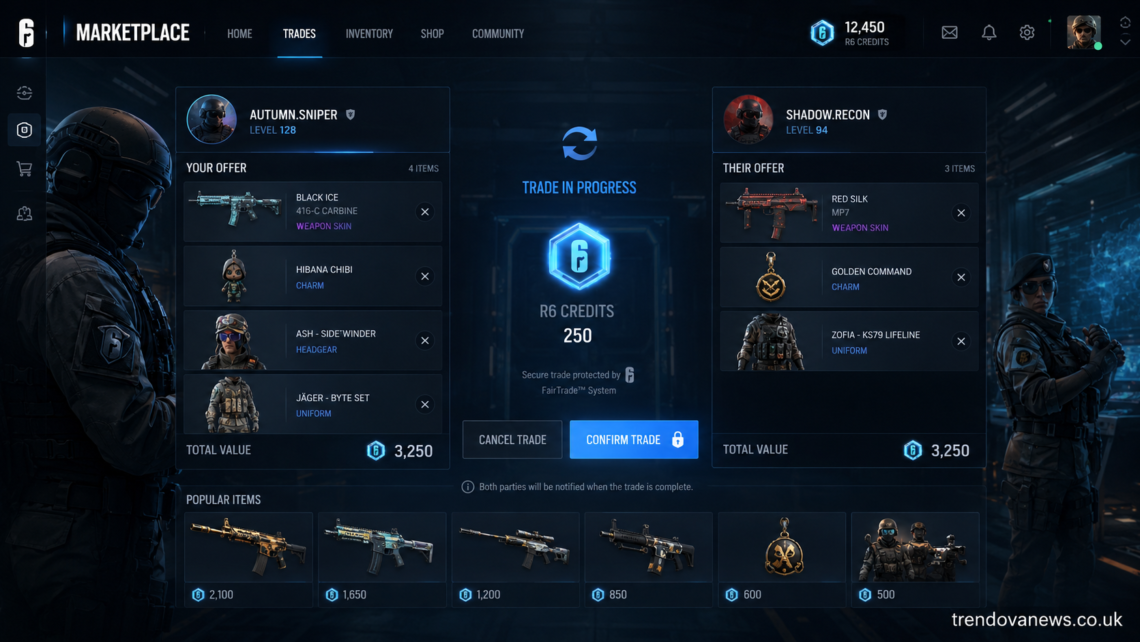
Introduction to the R6 Marketplace
The R6 Marketplace has emerged as one of the most impactful additions to Tom Clancy’s Rainbow Six Siege, fundamentally changing how players interact with in-game cosmetics. For years, players relied on Alpha Packs, seasonal bundles, and limited-time store rotations to obtain skins and cosmetic items. This often meant depending on luck or waiting for rare items to return. With the introduction of the marketplace, Ubisoft has created a more transparent and player-driven system that gives users direct control over their inventory.
At its core, the R6 Marketplace reflects a broader trend in modern gaming, where digital ownership and player economies are becoming increasingly important. By allowing players to trade cosmetic items securely, Ubisoft has enhanced both the economic and social aspects of the game. Players are no longer passive consumers; they are active participants in a living, evolving marketplace where value is determined by demand, rarity, and timing.
Understanding the Concept of the R6 Marketplace
The R6 Marketplace is an official in-game trading platform that allows players to buy and sell cosmetic items directly with one another. Unlike third-party trading sites, which often carry risks such as scams or account theft, this system is fully integrated within the game’s ecosystem. This ensures that all transactions are secure, verified, and aligned with Ubisoft’s policies.
What makes the marketplace unique is its reliance on a player-driven economy. Prices are not fixed by developers but fluctuate based on supply and demand. This means that rare skins, event-exclusive cosmetics, and discontinued items can gain significant value over time. On the other hand, common items may see their prices drop as more players list them for sale. This dynamic creates a realistic economic environment that mirrors real-world marketplaces in many ways.
How the Trading System Works in Practice
The trading mechanism in the R6 Marketplace is built around buy and sell orders. Players who want a specific item can place a buy order, stating the maximum number of R6 Credits they are willing to pay. Sellers, on the other hand, list items at their desired price. When a buyer’s offer matches a seller’s asking price, the system automatically completes the transaction.
This automated process removes the need for direct negotiation and ensures fairness for all participants. It also reduces friction, making trading fast and efficient. Transactions happen seamlessly in the background, allowing players to focus on gameplay while their listings remain active. This design reflects a well-thought-out system that prioritizes both usability and security.
Types of Items Available in the Marketplace
The R6 Marketplace focuses exclusively on cosmetic items, ensuring that gameplay remains balanced and competitive. Players can trade weapon skins, charms, uniforms, headgear, and attachment skins. These items allow for extensive customization, enabling players to express their personal style and identity within the game.
However, not all cosmetics are immediately tradable. Ubisoft carefully controls which items can enter the marketplace, often delaying the availability of newly released skins. This approach helps maintain the value of rare items and prevents the market from being flooded with new content. Over time, as more items become eligible for trading, the marketplace continues to expand and diversify.
Currency and Economic Structure
All transactions in the R6 Marketplace are conducted using R6 Credits, the premium currency in Tom Clancy’s Rainbow Six Siege. These credits are purchased with real money but remain locked within the game’s ecosystem, meaning they cannot be converted back into cash. This ensures that the marketplace operates within a controlled environment while still offering real value to players.
The pricing of items is entirely driven by market forces. Rare skins, especially those from past events or limited-time promotions, often command high prices due to their scarcity. Meanwhile, more common items are generally affordable and widely available. Ubisoft also applies a small transaction fee to each sale, which helps regulate the economy and maintain platform sustainability.
Benefits of Using the R6 Marketplace
One of the most significant advantages of the R6 Marketplace is the level of control it gives players. Instead of relying on random drops, users can directly purchase the items they want. This eliminates frustration and makes the process of building a unique cosmetic collection far more enjoyable. Players can also sell unused items, turning them into credits that can be reinvested into more desirable cosmetics.
Another key benefit is security. Because the marketplace is officially managed by Ubisoft, all transactions are protected within the game’s infrastructure. This eliminates the risks associated with third-party trading platforms, such as scams or unauthorized access. As a result, players can trade with confidence, knowing that their accounts and assets are सुरक्षित and protected.
Strategies for Maximizing Value in the Marketplace
Success in the R6 Marketplace requires a combination of patience, observation, and strategic thinking. Players who regularly monitor price trends can identify opportunities to buy low and sell high. Understanding which items are in demand and which are losing popularity is crucial for making informed decisions.
Timing also plays an important role. Prices can fluctuate based on seasonal events, updates, or changes in player interest. For example, an item that seems undervalued today may become highly sought after in the future. By staying informed and adapting to market trends, players can maximize the value of their trades and build a more valuable inventory over time.
Rules, Restrictions, and Safety Measures
To maintain a fair and secure trading environment, the R6 Marketplace operates under strict rules and guidelines. Players must meet certain eligibility requirements, such as account verification and security settings, before they can access the platform. These measures help prevent fraud and ensure that all participants are legitimate users.
There are also limitations on trading activity, including caps on the number of active listings and transactions. These restrictions are designed to prevent abuse and maintain stability within the marketplace. Additionally, all trades are final, meaning players must carefully review their decisions before confirming a transaction. This emphasizes the importance of informed trading and responsible participation.
The Impact on the Rainbow Six Siege Community
The introduction of the R6 Marketplace has had a profound impact on the Tom Clancy’s Rainbow Six Siege community. It has created a new layer of engagement, allowing players to interact not just through gameplay but also through trading. This has strengthened the sense of community and added depth to the overall experience.
Moreover, the marketplace has increased the perceived value of cosmetic items. Long-time players who have accumulated rare skins can now benefit from their collections, while new players have access to items that were previously unattainable. This balance between accessibility and exclusivity has made the game more inclusive while preserving the prestige of rare cosmetics.
Challenges and Common Mistakes to Avoid
Despite its many advantages, the R6 Marketplace can be challenging for beginners. One of the most common mistakes is overpaying for items due to a lack of market knowledge. Without understanding price trends, players may end up spending more credits than necessary.
Another challenge is impatience. Some listings may take time to sell, especially if they are priced above market value. Players who adjust their expectations and remain patient are more likely to succeed. Learning how the system works and gaining experience over time are essential for navigating the marketplace effectively.
The Future of the R6 Marketplace
The R6 Marketplace is still evolving, and its future looks promising. Ubisoft continues to refine the system, improve user experience, and expand the range of tradable items. As more players gain access and participate in trading, the marketplace is expected to become even more active and competitive.
Future updates may introduce advanced features such as better analytics tools, improved search functionality, and expanded customization options. These enhancements will further strengthen the marketplace’s role as a central feature of the game. With ongoing support and development, it is likely to remain a key component of the Tom Clancy’s Rainbow Six Siege ecosystem.
Conclusion
The R6 Marketplace represents a major evolution in how players interact with in-game cosmetics. By creating a secure, player-driven trading system, Ubisoft has addressed many of the limitations of traditional in-game stores. Players now have the freedom to buy, sell, and manage their inventories in a way that feels both rewarding and meaningful.
For anyone invested in Tom Clancy’s Rainbow Six Siege, the marketplace offers a powerful tool for customization and strategic trading. With the right approach, players can enhance their experience, access rare items, and even build a valuable collection over time. As the platform continues to grow, it will undoubtedly play an even greater role in shaping the future of the game and its community.