Introduction
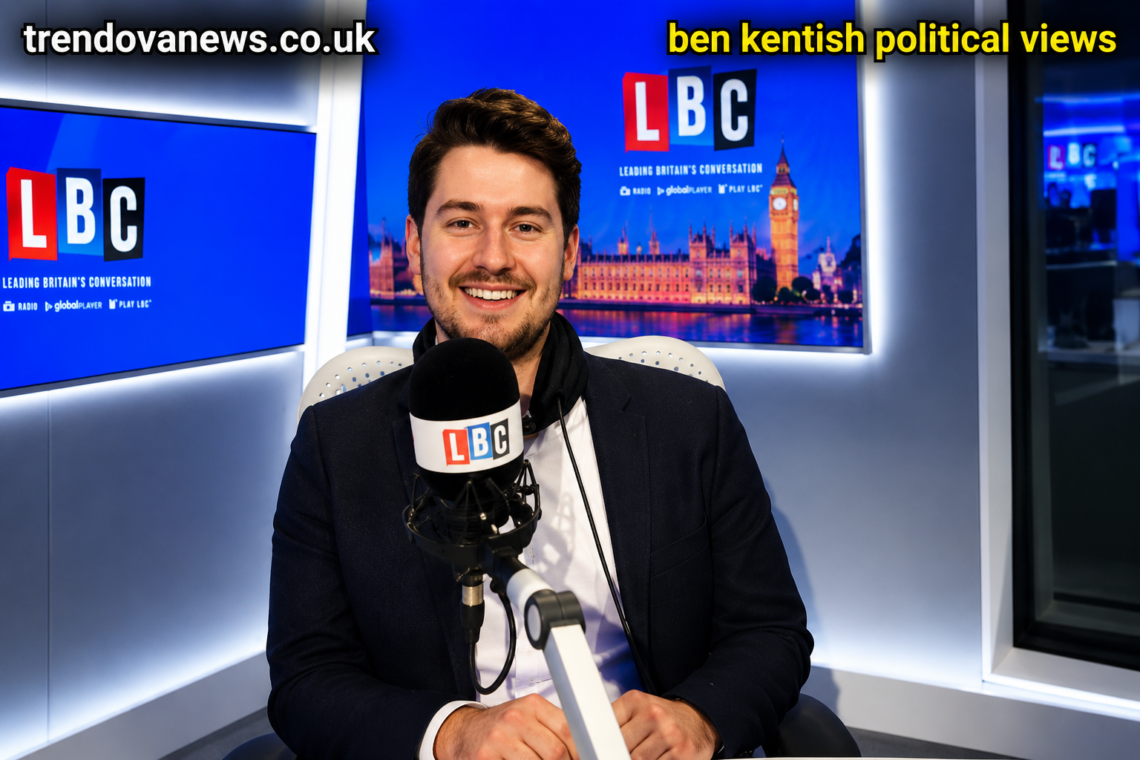
ben kentish political views is a British political journalist and broadcaster widely known for his work with LBC and other UK media platforms. ben kentish political views Over the years, he has become a familiar voice in Westminster political reporting, especially through his late-night radio show and commentary on major national issues. As his profile has grown, so has public curiosity about Ben Kentish political views,ben kentish political views with many audiences trying to determine whether he leans left, right, or remains politically neutral.
Understanding his political stance requires careful analysis of his journalism style, public commentary, and professional role. Unlike politicians or activists, Kentish operates within a media framework that values impartiality, balance, and accountability. This article explores his ideological positioning, perceived biases, and broader influence within UK political journalism, using available public information and contextual media analysis.
Ben Kentish Background and Career in Political Journalism
ben kentish political views began his career in journalism after studying at the University of Cambridge, where he developed a strong academic foundation in politics and public affairs. He entered the media industry through roles in political communications and writing before transitioning into mainstream journalism. His early reporting experience included ben kentish political views working for major UK publications where he covered national events such as elections, terror attacks, and government policy developments.
His career later progressed to The Independent, where he served as a political correspondent. During this period, he covered key political moments in modern ben kentish political views British history, including Brexit developments and general elections. His reporting style focused on clarity, direct political analysis, and explaining complex policy issues to the public in accessible language. ben kentish political views This early phase of his career helped shape his reputation as a journalist capable of both breaking news and providing thoughtful political interpretation.
Rise to Prominence at LBC and Westminster Reporting Role
Ben Kentish joined LBC as a Westminster correspondent and later became a Westminster editor and presenter. In this role, he gained direct access to ben kentish political views political decision-makers, parliamentary developments, and live policy discussions. ben kentish political views His coverage of UK politics positioned him as a key voice in political radio journalism, especially during politically turbulent periods such as leadership changes and government scandals.
At LBC, Kentish became known for hosting discussions involving politicians from across the political spectrum. His role required him to question Conservative, ben kentish political views Labour, Liberal Democrat, and other party representatives without showing clear preference for any ideological group. According to media profiles and broadcaster descriptions, ben kentish political views his work is built on journalistic neutrality, meaning his primary responsibility is not to advocate political positions but to interrogate them critically and fairly.
This professional environment significantly influences how his political views are perceived. Because he regularly challenges politicians, some listeners interpret his questioning style as political bias, even though it is part of standard broadcast journalism practice.
Analysis of Ben Kentish Political Views and Ideological Positioning
When examining Ben Kentish political views, it becomes clear that he does not publicly identify with any political party or ideological movement. There is no evidence of formal affiliation with Labour, Conservative, Liberal Democrats, or any other UK political organization. Instead, his public persona is defined by analysis rather than advocacy.
However, like many political journalists, Kentish often expresses opinions on governance, accountability, and institutional performance. His commentary frequently emphasizes democratic transparency, political responsibility, and the functioning of public institutions. These themes are commonly associated with centrist or pragmatic political thinking, rather than strict ideological alignment.
Some of his commentary has been interpreted as critical of government authority, particularly when discussing political scandals or leadership controversies. At the same time, he also scrutinizes opposition parties when necessary, reinforcing the perception that his approach is issue-based rather than partisan. This balanced scrutiny contributes to his reputation as a political commentator rather than a political supporter.
Ben Kentish Views on the Conservative Party and Government Accountability
Ben Kentish’s coverage of Conservative governments has often focused on leadership challenges, policy decisions, and political accountability. During major political events such as internal party disputes, ministerial resignations, and national controversies, he has provided detailed analysis of how government actions affect public trust and institutional stability.
One notable aspect of his reporting is his focus on political ethics and responsibility within Westminster. He has discussed issues related to party discipline, internal government culture, and the pressures faced by MPs in highly partisan environments. His commentary on Westminster culture has included criticism of what he describes as the intense loyalty demanded by party systems, which can discourage independent political judgment.
This approach does not necessarily reflect ideological opposition to conservatism. Instead, it reflects a broader journalistic interest in how power operates within government structures. His analysis tends to evaluate effectiveness, transparency, and accountability rather than ideological correctness.
Ben Kentish and Labour Party Commentary and Policy Analysis
Ben Kentish has also extensively covered the Labour Party, particularly during leadership transitions and policy development debates. His analysis often focuses on Labour’s electoral strategy, policy positioning, and internal dynamics. Rather than consistently supporting or opposing Labour policies, he evaluates their political impact and public reception.
In several discussions, Kentish has examined Labour’s efforts to redefine its identity in the post-Brexit political landscape. His commentary includes analysis of how the party balances traditional working-class support with broader electoral appeal. This reflects a journalistic interest in political strategy rather than ideological alignment.
At times, he has highlighted Labour policy proposals that address economic inequality and public service reform, while also questioning the feasibility or political consequences of certain proposals. This dual approach reinforces the perception that his analysis is guided by practical political evaluation rather than partisan loyalty.
Perceived Bias, Media Criticism, and Audience Interpretation
Public perception of Ben Kentish political views varies significantly depending on audience perspective. In the UK’s highly polarized media environment, journalists are often labeled according to how their commentary aligns or conflicts with individual political beliefs. As a result, Kentish is sometimes perceived differently by Conservative and Labour audiences.
Some critics view his questioning style as leaning towards centre-left commentary due to his focus on government accountability and social issues. Others see him as part of a mainstream media establishment that applies consistent scrutiny across all political actors. These contrasting interpretations highlight the difficulty of categorizing modern political journalists within traditional ideological labels.
This perception gap is further widened by social media discourse, where short clips and statements are often removed from broader context. In such environments, journalistic questioning can be misinterpreted as political endorsement, even when it is part of neutral reporting practice.
Ben Kentish Journalism Style and Commitment to Neutrality
A defining feature of Ben Kentish’s career is his commitment to journalistic neutrality. His role as a broadcaster requires him to facilitate political discussions rather than participate as a political actor. This involves interviewing politicians, moderating debates, and presenting political news in a balanced format.
His reporting style emphasizes clarity, structured questioning, and engagement with multiple viewpoints. Rather than presenting single-perspective narratives, he encourages discussion among politicians, experts, and callers. This approach aligns with traditional principles of UK broadcast journalism, which prioritize fairness and due impartiality.
Kentish’s professionalism is also reflected in his ability to handle politically sensitive topics without overt ideological framing. Whether discussing immigration, economic policy, or international relations, his approach focuses on explanation and accountability rather than advocacy.
Ben Kentish Social Media Presence and Public Commentary
Ben Kentish maintains an active presence on social media platforms, where he shares political updates, commentary, and reactions to current events. His posts often reflect ongoing developments in Westminster politics, breaking news, and policy debates.
His social media activity generally mirrors his journalistic work, emphasizing factual reporting and real-time political analysis. While he may express opinions on political developments, these remain consistent with his role as a commentator rather than a political advocate. The tone of his online presence is typically analytical rather than ideological, reinforcing his professional identity as a journalist.
However, social media environments often amplify perceptions of bias, especially when users engage with politically charged topics. As a result, interpretations of his online commentary vary widely depending on the audience’s political perspective.
Conclusion: Understanding Ben Kentish Political Views in Context
Ben Kentish political views cannot be accurately defined through traditional party labels or ideological categories. Based on his career, public commentary, and media presence, he is best understood as an independent political journalist whose analysis focuses on accountability, governance, and political performance.
While some interpretations place him in a centrist or pragmatic category, his work does not consistently align with any specific ideological framework. Instead, his journalism reflects the core principles of modern political reporting: neutrality, scrutiny, and balanced analysis. In an increasingly polarized media environment, this position often leads to differing public perceptions, but it remains central to his professional identity.
Ultimately, Ben Kentish represents a style of political journalism that prioritizes explanation over advocacy, making his role more about interpreting politics than participating in it.