Introduction
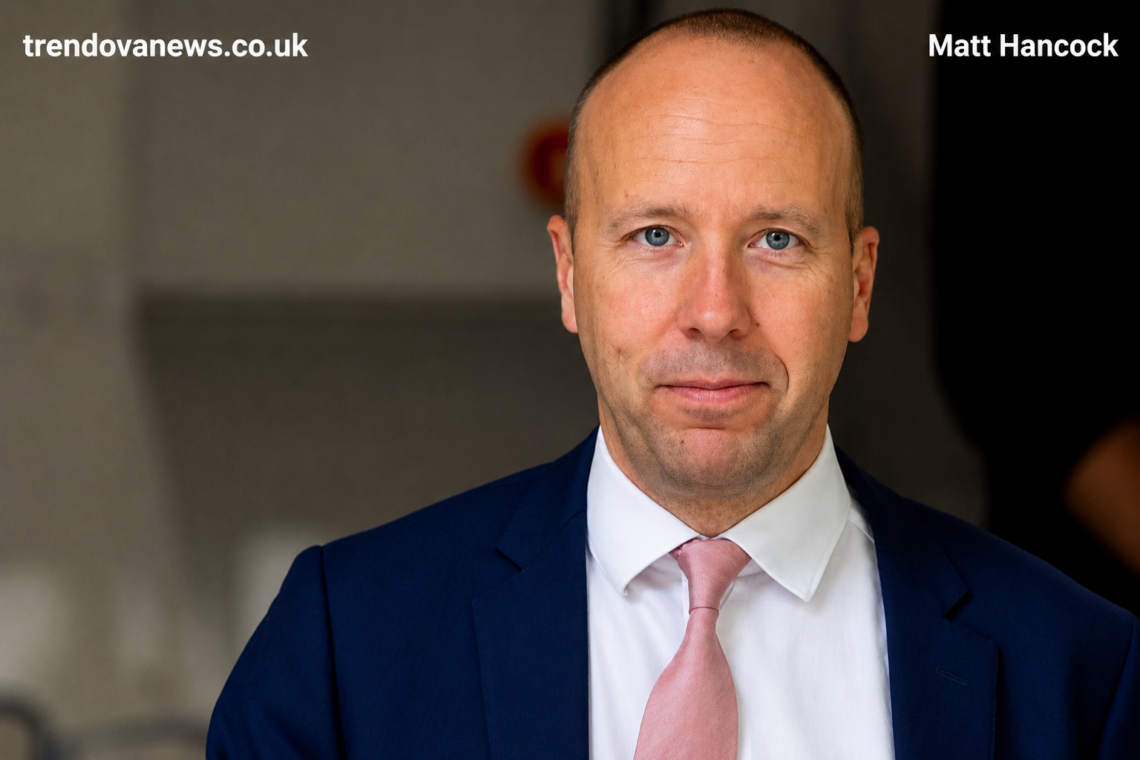
Matt Hancock is a British politician best known for his time as Secretary of State for Health and Social Care during one of the most challenging periods in modern UK history—the COVID-19 pandemic. His career spans roles in economic policy, digital transformation, and cabinet-level leadership within the Conservative Party. Over time, Matt Hancock Hancock became a prominent public figure due to his high-profile responsibilities, particularly during the pandemic response, where his decisions were closely scrutinized by the media, Parliament, and the public.
Beyond his governmental work, Hancock’s career has also been shaped by controversy, resignation from cabinet office, and a shift into public-facing media appearances. His political journey reflects both rapid rise within UK politics and the intense pressures associated with leadership during national crises. Understanding his background, achievements, Matt Hancock and criticisms provides insight into contemporary British governance and the complexities of political accountability.
Early Life, Education, and Family Background
Matt Hancock was born on October 2, 1978, in Chester, Cheshire, England. He grew up in a well-educated and entrepreneurial family environment, which influenced his early interest in economics, technology, and public policy. His upbringing provided him with exposure to business thinking and analytical problem-solving, shaping his later political focus on efficiency and modernization.
He attended private education before moving on to higher studies at Exeter College, Oxford, where he read Philosophy, Politics, and Economics (PPE), Matt Hancock a degree widely known for producing many UK political leaders. His academic background strengthened his understanding of governance systems, economic frameworks, and political theory, all of which became central to his later policy work.
After graduating, Hancock pursued a career in economics and public policy. He worked at the Bank of England and later joined the Conservative Party’s economic advisory team. These roles gave him early experience in financial systems and macroeconomic policy, Matt Hancock helping him build credibility as a technically skilled politician with a strong understanding of data-driven governance.
Entry into Politics and Early Parliamentary Career
Matt Hancock entered frontline politics when he was elected as the Member of Parliament for West Suffolk in the 2010 general election. His election came during a significant political shift in the UK, as the Conservative Party formed a coalition government with the Liberal Democrats under David Cameron.
In his early parliamentary years, Hancock quickly gained attention for his communication skills and expertise in economic matters. He was seen as part of a new generation of Conservative politicians focused on modernization and technological development. His work often centered on improving efficiency in government operations and promoting digital innovation in public services.
During this period, Hancock also served in advisory and junior ministerial roles. His reputation grew within the party as someone capable of bridging economic policy with digital transformation strategies. This combination of skills positioned him for rapid advancement within the government hierarchy.
Rise Through Government Roles and Pre-Health Secretary Career
Before becoming Health Secretary, Matt Hancock held several important ministerial positions that shaped his political identity. One of his early significant roles was within the Department for Business, Innovation and Skills, where he worked on apprenticeships, enterprise development, and workforce skills improvement. His focus was often on improving productivity and preparing the UK workforce for technological change.
He later served as Minister of State for Digital and Culture, where he was responsible for expanding broadband infrastructure, supporting creative industries, and strengthening cybersecurity frameworks. His tenure in this role aligned with the UK’s broader push toward becoming a global leader in digital innovation.
In 2018, he was promoted to Secretary of State for Digital, Culture, Media and Sport. In this position, he championed artificial intelligence development, online safety regulations, and investment in technology infrastructure. His leadership style emphasized modernization, digital-first governance, and the use of data in policymaking, which eventually contributed to his elevation to one of the UK’s most important cabinet positions.
Appointment as Health Secretary and NHS Responsibilities
Matt Hancock was appointed Secretary of State for Health and Social Care in July 2018 under Prime Minister Theresa May, later continuing under Boris Johnson. This role placed him in charge of the National Health Service (NHS) in England, public health policy, and healthcare system management.
During his early tenure, Hancock focused on reducing NHS waiting times, improving hospital efficiency, and increasing investment in healthcare technology. He promoted digital health records, AI-driven diagnostics, and modernization of healthcare infrastructure. His approach was heavily influenced by his background in digital policy and economic efficiency.
As Health Secretary, Hancock became one of the most visible members of the UK government, regularly addressing healthcare challenges and system reforms. However, his leadership would soon be defined by an unprecedented global crisis that reshaped his political career entirely.
Matt Hancock and the COVID-19 Pandemic Response
The COVID-19 pandemic marked the most critical phase of Matt Hancock’s political career. As Health Secretary, he played a central role in shaping the UK’s public health response, including lockdown measures, testing strategies, and vaccine distribution planning.
He frequently appeared in daily government briefings, becoming one of the most recognizable figures in the national response effort. Hancock was responsible for expanding COVID-19 testing capacity across the UK, particularly during periods when demand far exceeded supply. He also oversaw coordination with scientific advisors and pharmaceutical companies during the rapid development of vaccines.
The UK’s vaccine rollout became one of the key achievements of the pandemic response, and Hancock was closely associated with early vaccination success. However, his handling of the crisis was also subject to criticism, particularly regarding delays in testing expansion, PPE shortages, and early care home policies. These issues became central topics in later public inquiries and media discussions surrounding pandemic preparedness and decision-making.
Controversies During COVID-19 and Government Scrutiny
Despite his central role in the pandemic response, Matt Hancock faced significant criticism from political opponents, healthcare professionals, and parts of the public. One major area of concern was the handling of care home policies during the early stages of COVID-19, particularly decisions involving hospital discharges without widespread testing.
Another area of controversy involved the procurement of personal protective equipment (PPE). Questions were raised about the transparency and speed of contract awards during the emergency response period. While emergency conditions required rapid decision-making, critics argued that oversight mechanisms were not always sufficiently robust.
Hancock also faced scrutiny over communication consistency, particularly regarding testing targets and public health messaging. Some statistical claims and policy announcements were challenged by experts, contributing to ongoing debates about transparency and governance during crisis management.
Resignation Following COVID Rule Breach
In June 2021, Matt Hancock resigned as Health Secretary after footage emerged showing him breaching COVID-19 social distancing rules by engaging in a personal relationship with an aide inside his office. The incident occurred while strict restrictions were still in place for the public across the UK.
The revelation caused widespread political backlash and public criticism. Many argued that his actions undermined public trust at a time when citizens were being asked to follow strict health regulations. Following the release of the footage, Hancock stated that he believed it was appropriate to resign because those responsible for setting rules must also adhere to them.
His resignation marked a major turning point in his political career, ending his role at the forefront of the UK’s pandemic response and shifting him back to the backbenches of Parliament.
Post-Political Media Career and Public Appearances
After stepping down as Health Secretary, Matt Hancock continued as an MP but gradually shifted toward media and public engagement roles. In 2022, he participated in the reality television show “I’m a Celebrity… Get Me Out of Here!”, which generated significant public debate and political controversy.
His appearance on the show led to him losing the Conservative Party whip temporarily, as many viewed the decision as unconventional for a sitting Member of Parliament. Supporters argued that it allowed him to reach a wider audience and rebuild his public image, while critics saw it as a departure from traditional political responsibilities.
Since then, Hancock has remained a public figure through interviews, speaking engagements, and advocacy work, particularly around dyslexia awareness, as he has openly discussed his personal experiences with the condition.
Political Legacy and Current Status
Matt Hancock’s legacy in British politics is complex and widely debated. On one hand, he is associated with key aspects of the UK’s COVID-19 response, particularly vaccine rollout coordination and emergency health system management. These contributions are often recognized as significant in the context of a global health crisis.
On the other hand, his career is also defined by controversies related to pandemic management, public trust, and personal conduct in office. His resignation and subsequent media appearances have further shaped public perception, making him one of the most discussed political figures of his generation.
Today, Hancock remains a Member of Parliament but is no longer a central figure in government leadership. His career continues to be examined as part of broader discussions about crisis governance, political accountability, and leadership under pressure.
Conclusion
Matt Hancock’s political journey reflects both rapid ascent and significant turbulence within modern British politics. From his early work in economics and digital policy to his leadership role during the COVID-19 pandemic, he has been at the center of major national decisions that affected millions of people. His time in office demonstrates the complexity of governing during crises, where urgent decisions, public expectations, and political scrutiny intersect.
While his contributions to digital transformation and vaccine rollout are often acknowledged, his legacy is also shaped by controversies and ethical questions that continue to influence public debate. Ultimately, Matt Hancock remains a notable figure in UK political history, representing both the achievements and challenges of contemporary governance.