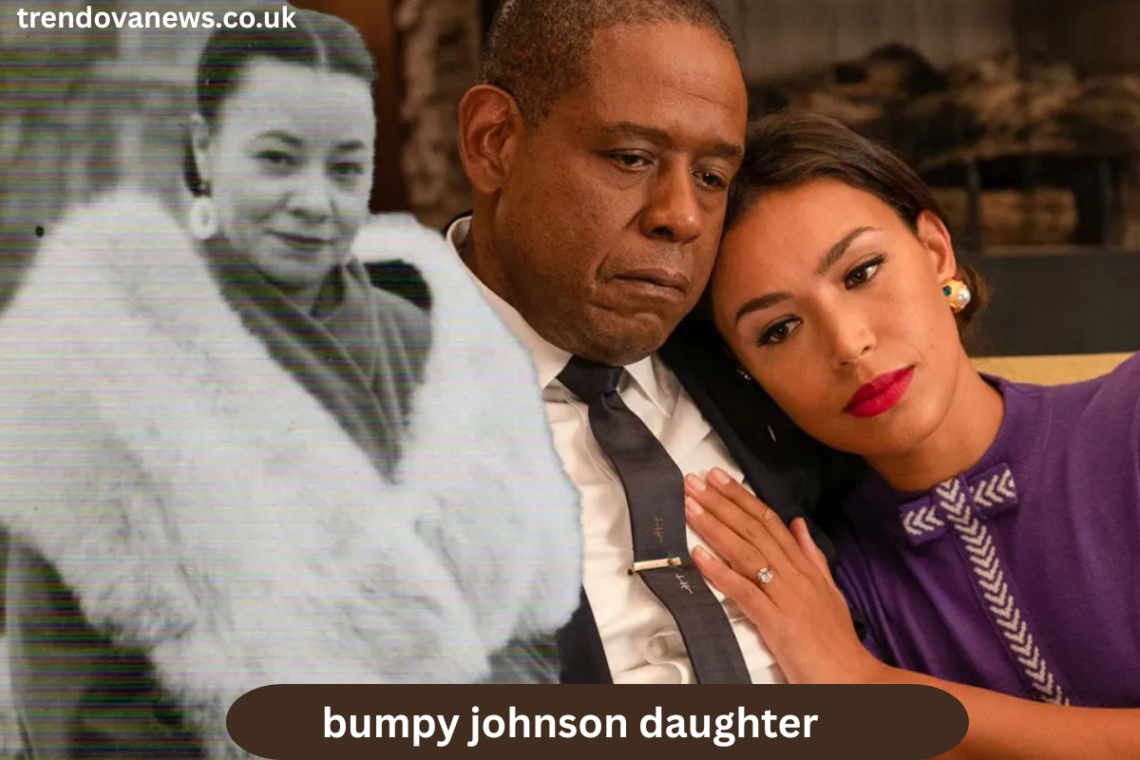
The story of Bumpy Johnson’s daughter is far less widely known than the legend of her father, yet it offers an equally compelling window into Harlem’s social history. Ellsworth Raymond “Bumpy” Johnson was one of the most influential and controversial figures in mid-20th-century New York. As a central figure in Harlem’s organized crime scene, he became known as the “Godfather of Harlem,” a reputation that has only grown through books, documentaries, and television portrayals. But behind the myth, power, and criminal empire stood a family whose lives were deeply shaped by his choices. Among them was his eldest daughter, Elease Johnson, whose life was marked by both privilege and profound struggle.
Understanding Bumpy Johnson’s daughter requires looking beyond sensational headlines. Her story intersects with themes of generational legacy, addiction, race, community, and the heavy social stigma attached to crime families. While her father’s life has been romanticized in pop culture, Elease’s life reflects a far more complicated reality. She grew up inside Harlem’s most powerful household at a time when the neighborhood was culturally vibrant but socially turbulent. Her experiences reveal the human cost of notoriety and the challenges faced by children of famous and infamous figures alike.
Table of Contents
ToggleThe Family Background of Bumpy Johnson
Bumpy Johnson was born in Charleston, South bumpy johnson daughter Carolina, in 1905 and later moved to New York City, where he rose through the ranks of Harlem’s underground economy. During the 1930s and 1940s, he became closely associated with the numbers racket and developed working relationships with members of the Italian Mafia, including figures connected to the broader New York crime syndicate. Despite his criminal involvement, he was known for his intelligence, love of literature, and commanding presence. Harlem residents often viewed him as both a dangerous figure and a protector of the community.
Before marrying Mayme Hatcher in 1948, Bumpy fathered a daughter named Elease Johnson. After his marriage, Mayme became a stepmother to Elease while also raising their biological daughter, Ruthie Johnson. The Johnson household thus became a blended family navigating extraordinary circumstances. Bumpy spent multiple periods incarcerated on drug charges, which meant that much of Elease’s childhood unfolded during his absences. Even so, his influence remained central in shaping her identity bumpy johnson daughter and social standing within Harlem.
The Johnson family lived in relative comfort compared to many Harlem residents. They resided in a well-maintained brownstone and had access to material stability that came from Bumpy’s earnings. Yet that stability was fragile, constantly threatened by bumpy johnson daughter law enforcement scrutiny and the volatile world of organized crime. For Elease, this meant growing up in an environment where privilege and danger existed side by side.
Growing Up in Harlem’s Cultural and Criminal Landscape
Harlem during Elease Johnson’s childhood was a neig bumpy johnson daughter hborhood rich in artistic achievement and political consciousness. Though the peak of the Harlem Renaissance had passed, its cultural energy lingered. Jazz clubs, community organizations, churches, and small businesses formed the backbone of daily life. At the same time, the area struggled with systemic bumpy johnson daughter racism, limited economic opportunities, and the growing influence of narcotics distribution networks.
As the daughter of Bumpy Johnson, Elease occupied a unique position in this environment. Many neighbors respected her father for resisting exploitation by outside criminal organizations and for quietly assisting struggling residents. Others feared him, associating his name with violence and illegal enterprise. This dual perception inevitably affected Elease’s social experiences. She was not just another child in the neighborhood; she carried a name that evoked both admiration and suspicion.
School presented particular challenges. Reports suggest that some institutions hesitated to admit her because of her father’s reputation. In an era bumpy johnson daughter when racial prejudice already limited opportunities for African American children, the additional stigma of organized crime further complicated her educational path. While Bumpy valued education and reportedly encouraged reading and intellectual discussion at home, external barriers restricted Elease’s ability to pursue higher academic achievement in a conventional way.
Life Inside the Johnson Household
Within the home, family dynamics were layered and complex. Mayme Hatcher Johnson, Bumpy’s wife, played a stabilizing role in the household. She sought to create normalcy for both Elease and Ruthie despite the extraordinary circumstances surrounding them. Maintaining appearances was important, and the family aimed to function as any other would, attending church, bumpy johnson daughter hosting guests, and participating in community life.
Bumpy himself was described as a disciplined and structured father figure when present. Although he operated within a violent criminal world, accounts portray him as attentive in private life, teaching his children to read, encouraging strategic thinking through games like chess, and instilling a sense of pride in their heritage. These domestic moments offered Elease glimpses of an ordinary father-daughter relationship that contrasted sharply with the public image of a hardened crime boss.
However, the tension between public bumpy johnson daughter and private life could not be fully contained. Law enforcement surveillance, arrests, and media attention inevitably intruded. Conversations about business associates and rivalries were part of household reality. For a child, such exposure could blur the boundaries between normal family life and the dangers looming outside the front door.
Personal Struggles and the Heroin Epidemic
As Elease entered adulthood, Harlem bumpy johnson daughterbumpy johnson daughter itself was changing dramatically. The 1960s and 1970s saw a devastating heroin epidemic sweep through many urban neighborhoods, including Harlem. Addiction became a widespread crisis, affecting families across socioeconomic lines. Despite her upbringing in a relatively stable home, Elease was not immune to these pressures.
She developed a heroin addiction that would define much of her adult life. Substance dependency affected her physical health, emotional stability, and bumpy johnson daughter capacity to maintain employment or consistent housing. Addiction often erodes even the strongest support systems, and in Elease’s case, it created distance between her and the structured life her parents had tried to provide.
Her struggles also reportedly led to bumpy johnson daughterlegal troubles, including shoplifting incidents connected to sustaining her drug use. This marked a tragic contrast to her father’s larger-than-life criminal persona. While Bumpy had operated at the top of Harlem’s underworld hierarchy, Elease’s entanglements reflected the vulnerability and desperation common among those battling addiction. Her story illustrates how exposure to wealth and influence does not guarantee immunity from deeply personal battles.
Motherhood and Generational Impact
During her adulthood, Elease became bumpy johnson daughter a mother to a daughter named Margaret Johnson. Motherhood introduced another layer of complexity into her life. However, her ongoing addiction made it difficult for her to provide the stable environment her child needed. In response, Bumpy and Mayme stepped in to raise Margaret, effectively assuming parental responsibilities once again.
Margaret’s upbringing under her grandparents offered greater structure and opportunity than Elease was able to provide at that time. She reportedly developed a close bond with her grandfather, learning about discipline, business acumen, and family pride. This generational shift highlights a recurring theme: families adapting to protect children from the consequences of addiction and instability.
For Elease, this arrangement may have bumpy johnson daughter carried emotional weight. Losing primary custody of a child can intensify feelings of shame and loss, further complicating recovery efforts. At the same time, it ensured that Margaret had access to education and a secure home. The Johnson family thus became an example of how extended family networks can intervene during times of crisis, even when the root causes are deeply painful.
Later Years and Passing
Elease Johnson’s later years were largely private and removed from the public spotlight that had surrounded her father. Unlike Bumpy, whose funeral in 1968 drew widespread attention in Harlem, Elease lived quietly. Her life did not receive extensive media coverage, and much of what is known comes from secondary accounts and community recollections.
She passed away in 2006, reportedly bumpy johnson daughter from health complications associated with long-term substance use. The same year, her ha lf-sister Ruthie Johnson also died, marking a symbolic end to Bumpy Johnson’s direct lineage through his daughters. Their deaths closed a chapter in Harlem history that had spanned much of the 20th century.
Though Elease’s life did not achieve public acclaim, it remains significant as part of the broader Johnson family narrative. Her journey underscores the long-term consequences of addiction and the enduring impact of growing up within a high-profile and controversial family.
Representation in Popular Culture
Interest in Bumpy Johnson’s family has bumpy johnson daughter grown through modern portrayals, particularly the television series Godfather of Harlem. The show dramatizes Bumpy’s life and includes storylines inspired by his family relationships. While these portrayals draw attention to his daughter’s struggles, they take creative liberties for narrative effect.
Popular culture often romanticizes organized crime figures, emphasizing charisma and strategic brilliance. In contrast, the real story of Bumpy Johnson’s daughter offers a sobering counterbalance. It reminds viewers and readers that behind every legendary figure are family members whose lives may be shaped by forces beyond their control. Separating dramatized fiction from documented history is essential when examining such narratives.
Media portrayals have nevertheless sparked bumpy johnson daughter renewed curiosity about Elease Johnson, prompting discussions about the social environment of Harlem, the heroin epidemic, and the psychological toll of public notoriety on private lives.
Legacy Beyond the Legend
The legacy of Bumpy Johnson’s daughter is not defined by crime but by resilience amid adversity. Her life reflects broader themes that resonate far beyond one family’s story. Children of powerful figures often inherit reputations they did not choose. For Elease, that inheritance brought both protection and limitation, shaping how institutions and individuals responded to her.
Her struggles with addiction mirror those bumpy johnson daughter faced by countless individuals during one of America’s most challenging public health crises. In that sense, her story is not unique but deeply representative. It underscores the importance of addressing addiction as a medical and social issue rather than a moral failing. It also highlights the role of family support systems in mitigating harm across generations.
Ultimately, the story of Bumpy Johnson’s bumpy johnson daughter daughter adds depth to our understanding of Harlem’s history. It shifts the focus from mythologized crime narratives to the human realities that unfold behind closed doors. Through her life, we see how legacy can be both empowering and burdensome, offering lessons about identity, accountability, and compassion.
Read more:https://trendovanews.co.uk/
Conclusion
The life of Elease Johnson stands as a powerful bumpy johnson daughter reminder that history is not only shaped by infamous figures but also by the quieter lives intertwined with them. As the daughter of Bumpy Johnson, she grew up surrounded by influence, wealth, fear, and expectation. Yet her journey was deeply personal, defined by struggles with addiction, complex family relationships, and the search for stability in a turbulent environment.
While her father’s legend continues to capture public imagination, Elease’s story provides a necessary human dimension to that legacy. It encourages a broader perspective on organized crime history — one that acknowledges the emotional and generational consequences of notoriety. In understanding the life of Bumpy Johnson’s daughter, we gain not only historical insight but also bumpy johnson daughter a deeper appreciation for the resilience required to navigate life in the shadow of a legend.